SEE OUR SPECIALS
 FINANCING
 SCHEDULE A SERVICE
Choosing the right water heater is a decision that impacts your daily comfort and your monthly budget for decades. In Flat Rock, where winter temperatures often drop below freezing, the demand for reliable hot water is exceptionally high. Many homeowners are currently weighing the benefits of traditional storage tanks against the modern efficiency of tankless systems. While the initial price tag often drives the conversation, the true cost of ownership also includes energy consumption, maintenance requirements, and the specific water conditions in our region.
In this blog, we will analyze the performance of both technologies to determine which one offers the best return on investment for your household. By examining the technical differences and long-term savings, we aim to provide the clarity you need to make an informed decision about upgrading your Michigan home.
Traditional Storage Tanks: The Budget-Friendly Classic
The traditional storage tank water heater has been the standard choice for Flat Rock households for decades. These systems work by maintaining a large volume of water, typically between 40 and 50 gallons, at a constant high temperature. This design ensures that hot water is immediately available when you turn on a faucet. However, the convenience of the storage method comes with a specific technical drawback: standby heat loss. Because the tank must keep the water hot 24 hours a day, the burner or heating element cycles on and off even when no one is home. This constant energy consumption can lead to higher utility bills over time.
Despite the energy inefficiency, storage tanks remain popular due to their significantly lower upfront investment. For many homeowners, the unit’s upfront cost and straightforward installation are the primary selling points. When a standard tank fails, the replacement is usually quick and requires minimal modifications to existing plumbing or venting. Consider these key factors regarding traditional tanks:
- Lower Initial Cost: The purchase price and installation fees are significantly lower than those of tankless alternatives.
- Simplicity of Repair: Because the technology is well established, parts are readily available, and repairs are generally inexpensive.
- Limited Hot Water: Once the tank is depleted by multiple showers or appliances, you must wait for the tank to refill.
- Physical Footprint: These units require a dedicated area in your basement or utility closet.
- Shorter Lifespan: Most traditional tanks last 10-12 years before corrosion or sediment buildup necessitates replacement.
While the lower entry price is attractive, Flat Rock residents should consider the replacement frequency. Over a twenty-year period, you will likely need to purchase and install two traditional units to match the lifespan of a single high-quality tankless system. This replacement cycle, combined with the monthly energy waste, often narrows the price gap between the two technologies faster than most people realize.
Tankless Water Heaters: The Efficiency Powerhouse
Tankless water heaters, often referred to as on-demand systems, operate on a fundamentally different principle than traditional tanks. Instead of keeping a large volume of water hot at all times, these units use high-powered burners or electric elements to heat the water only when a faucet is turned on. This design virtually eliminates standby heat loss, which is the primary cause of energy waste in older models. For a Flat Rock household, this shift in technology can lead to significant reductions in monthly gas or electric expenditures.
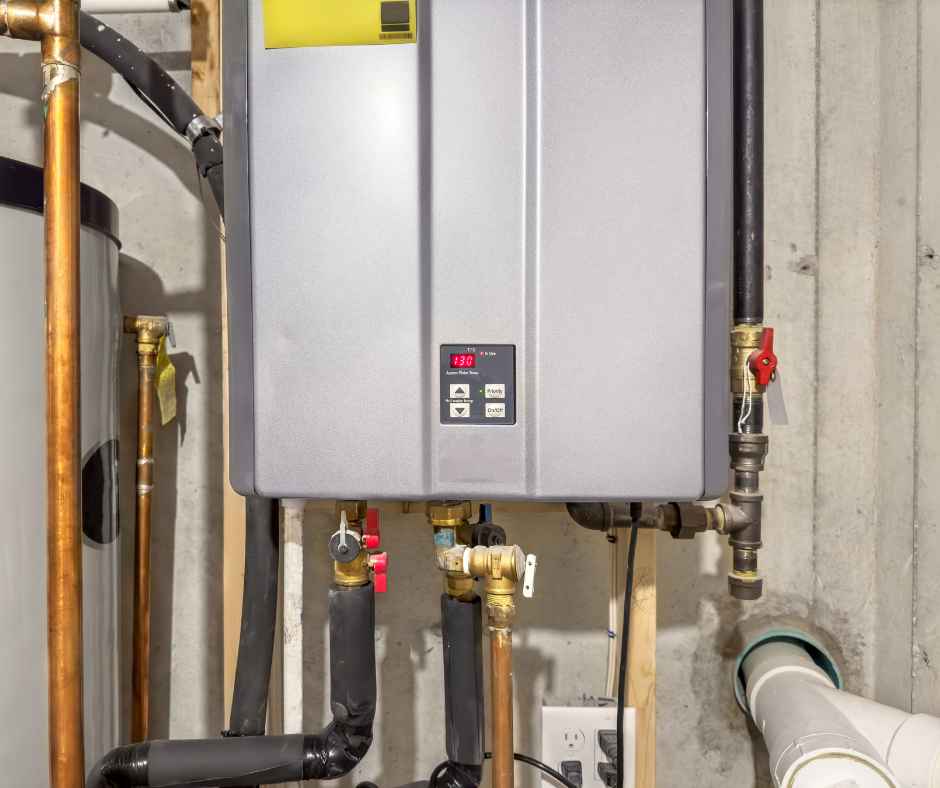
The most celebrated feature of a tankless water heater is the supply of endless hot water. Because the unit heats the water as it flows through the heat exchanger, you will never run out of hot water during back-to-back showers or while running the dishwasher and laundry simultaneously. This makes them an ideal choice for larger families or homes with high-capacity soaking tubs. Additionally, the physical design of these units is remarkably compact. Most tankless models are about the size of a carry-on suitcase and are mounted directly to the wall. This space-saving feature frees up valuable floor space in your basement or utility room for other uses.
- Superior Energy Efficiency: These systems can be significantly more energy-efficient than traditional storage tanks, particularly for homes with moderate water use.
- Extended Lifespan: A well-maintained tankless unit can last twenty years or more, nearly double the life of a standard tank.
- On-Demand Performance: You receive hot water only when you need it, reducing carbon footprints and utility costs.
- Reduced Risk of Flooding: Without a fifty-gallon tank of water, the risk of a catastrophic basement flood from a ruptured tank is eliminated.
- Digital Temperature Control: Most models allow for precise temperature adjustments to prevent scalding and save energy.
While installing a tankless water heater is more complex and requires specific venting, the long-term benefits are substantial. The combination of longevity and efficiency often makes these units the preferred choice for Flat Rock homeowners looking to modernize their infrastructure.
The Flat Rock Factor: Hard Water and Michigan Winters
Flat Rock’s geographic location presents specific environmental challenges that directly affect your water heater’s performance. In Michigan, we face two primary factors that can undermine even the most advanced plumbing systems: moderate water hardness and extreme seasonal temperature fluctuations. Flat Rock water typically contains minerals like calcium and magnesium, which are the root cause of scaling. While our local water hardness is typically around 6 grains per gallon, this level is enough to cause significant mineral buildup over several years.
In traditional storage tanks, these minerals precipitate from the water and settle to the bottom. This creates a thick layer of sediment that insulates the burner from the water, requiring the unit to run longer to reach the desired temperature. This inefficiency is a major contributor to high winter energy bills. For tankless systems, the impact is different but equally critical. Scaling occurs inside the narrow passages of the heat exchanger. If left unaddressed, this buildup restricts water flow and can cause the unit to shut down with error codes.
Michigan winters also introduce the challenge of frigid groundwater temperatures. During the coldest months, the water entering your home can drop to nearly forty degrees. This means your water heater must work significantly harder to raise the temperature to a comfortable 120 degrees compared to the summer months. Superior Comfort specializes in sizing units specifically for these local conditions. To maintain efficiency in our climate, we recommend the following:
- Annual Descaling for Tankless Units: A professional flush removes the calcium deposits that compromise the heat exchanger.
- Regular Tank Flushing: For traditional models, draining the sediment from the bottom of the tank restores heating efficiency.
- Water Softener Integration: Installing a water softener can eliminate scaling, extending the service life of both tank and tankless systems.
- Pipe Insulation: Wrapping your hot water lines reduces heat loss as water travels from the heater to your fixtures.
By accounting for the specific minerals in our water and the demands of our climate, you can ensure your system remains reliable. Whether you choose a tank or a tankless model, the local environment in Flat Rock necessitates a proactive maintenance strategy to avoid premature failure.
The Financial Breakdown: Upfront Costs vs. 20-Year ROI
The decision between these two systems often comes down to a comparison of immediate expenses versus long-term value. A traditional storage-tank water heater typically costs between $ 800 and $ 1,500, including professional installation. This low entry price makes it an attractive option for homeowners facing an unexpected equipment failure. In contrast, a tankless water heater installation typically ranges from $ 2,500 to $ 4,500. This higher cost is due to the unit’s sophisticated technology and the necessary upgrades to your home’s gas lines or venting systems.
However, viewing these figures in isolation does not provide the full financial picture. When you look at a twenty-year horizon, the return on investment for a tankless system becomes much clearer. Because a tankless unit lasts twice as long as a traditional model, you avoid the cost of a second replacement unit and a second installation fee. Furthermore, the energy savings in a Flat Rock home can be substantial. Consider the following breakdown of the total cost of ownership:
- Energy Bill Savings: Tankless units are approximately 24 to 34 percent more energy efficient than traditional tanks.
- Replacement Frequency: Over two decades, you will likely purchase one tankless unit rather than two traditional storage tanks.
- Maintenance Expenses: While tankless units require annual descaling, traditional tanks require more frequent flushes to manage Michigan sediment.
- Property Value Enhancement: High-efficiency appliances are a significant selling point that can increase your home’s resale value.
For many Flat Rock residents, the initial investment in tankless technology pays for itself within seven to ten years. After that point, the monthly utility savings are pure profit. If you plan to stay in your home for more than a decade, the tankless option is almost always the more financially sound choice.
2026 Incentives: Navigating Local Rebates and Tax Credits
One of the most compelling reasons to choose an energy-efficient upgrade in 2026 is the abundance of financial incentives available to Flat Rock residents. Under the current provisions of the Inflation Reduction Act, homeowners can claim substantial federal tax credits for installing high-efficiency water heating systems. Specifically, you may be eligible for a tax credit of up to 2,000 dollars for a heat pump water heater or up to 600 dollars for a qualifying high-efficiency natural gas tankless unit. These credits directly reduce your federal tax liability, making the transition to modern technology much more affordable.
In addition to federal support, local utility providers such as DTE Energy and Consumers Energy offer their own rebates to encourage residential energy efficiency. These programs often provide instant discounts or mail-in rebates for ENERGY STAR-certified models. By combining these utility rebates with federal tax credits, you can significantly offset the higher initial cost of a tankless or heat pump system. Our team at Superior Comfort can help you identify which specific incentives apply to your equipment to ensure you maximize your total savings.
Making the Best Choice for Your Family
Deciding between a tankless and a traditional water heater requires a careful assessment of your household’s specific hot water demands and your long-term financial goals. While a traditional tank offers a lower barrier to entry for budget-conscious homeowners, a tankless system provides unmatched energy efficiency and the luxury of endless hot water. In Flat Rock, the unique combination of hard water and cold winters means that whatever system you choose will require professional installation and consistent maintenance to perform at its peak.
Superior Comfort Heating, Cooling & Plumbing is here to guide you through the selection process and ensure your new unit is optimized for the Michigan climate. Contact us today to discuss your hot water needs and receive a personalized quote for your next high-efficiency upgrade.
Frequently Asked Questions (FAQ)
Can I switch from an electric tank to a gas tankless water heater?
Yes, it is possible to switch fuel sources, but it requires professional modification of your home’s infrastructure. A transition from electric to gas involves installing new gas lines and a dedicated venting system to safely exhaust combustion gases. Our team can evaluate your current utility setup to determine the most cost-effective path for a fuel conversion during your upgrade.
What is the “cold water sandwich” effect in tankless systems?
A cold-water sandwich occurs when a small amount of cold water is trapped between two segments of hot water in the pipes. This usually occurs when a faucet is turned off and then quickly turned back on. While high-end modern tankless units include a small internal buffer tank to prevent this, older or entry-level models may occasionally produce a brief burst of lukewarm water.
How does a tankless water heater perform during a power outage?
Since tankless units rely on electronic control boards and electric igniters, they will not function during a power outage without a backup power source. If your Flat Rock home experiences frequent power interruptions, we recommend installing a small battery backup or a dedicated surge protector to keep the unit operational and protect the sensitive electronics.
Will I need to upgrade my electrical panel for a tankless installation?
If you are installing a gas tankless unit, you likely will not need an electrical upgrade, as it only requires a standard 120-volt outlet for the igniter and controls. However, if you choose an all-electric tankless model, you may need a significant panel upgrade. Electric tankless units have extremely high amperage draws and often require multiple dedicated 240-volt circuits.
How noisy is a tankless water heater compared to a traditional tank?
Traditional tanks are virtually silent, whereas tankless units do produce some operational noise. When the unit is heating water, you will hear the fan and burner engage. This is generally no louder than a modern dishwasher or a small furnace. Because these units are typically mounted in utility rooms or basements, the sound is rarely noticeable in the home’s main living areas.